
Free Resource
2026 Cloud Security Architect Roadmap
Cloud security architects are some of the most in-demand and well-compensated roles in cybersecurity. They sit at the intersection of engineering, risk management, and business strategy, designing the security posture for entire cloud environments. But the path to get there isn't obvious. This roadmap lays out three clear tiers, from your first cloud security role through the architectural skills that put you in the room where infrastructure decisions get made.
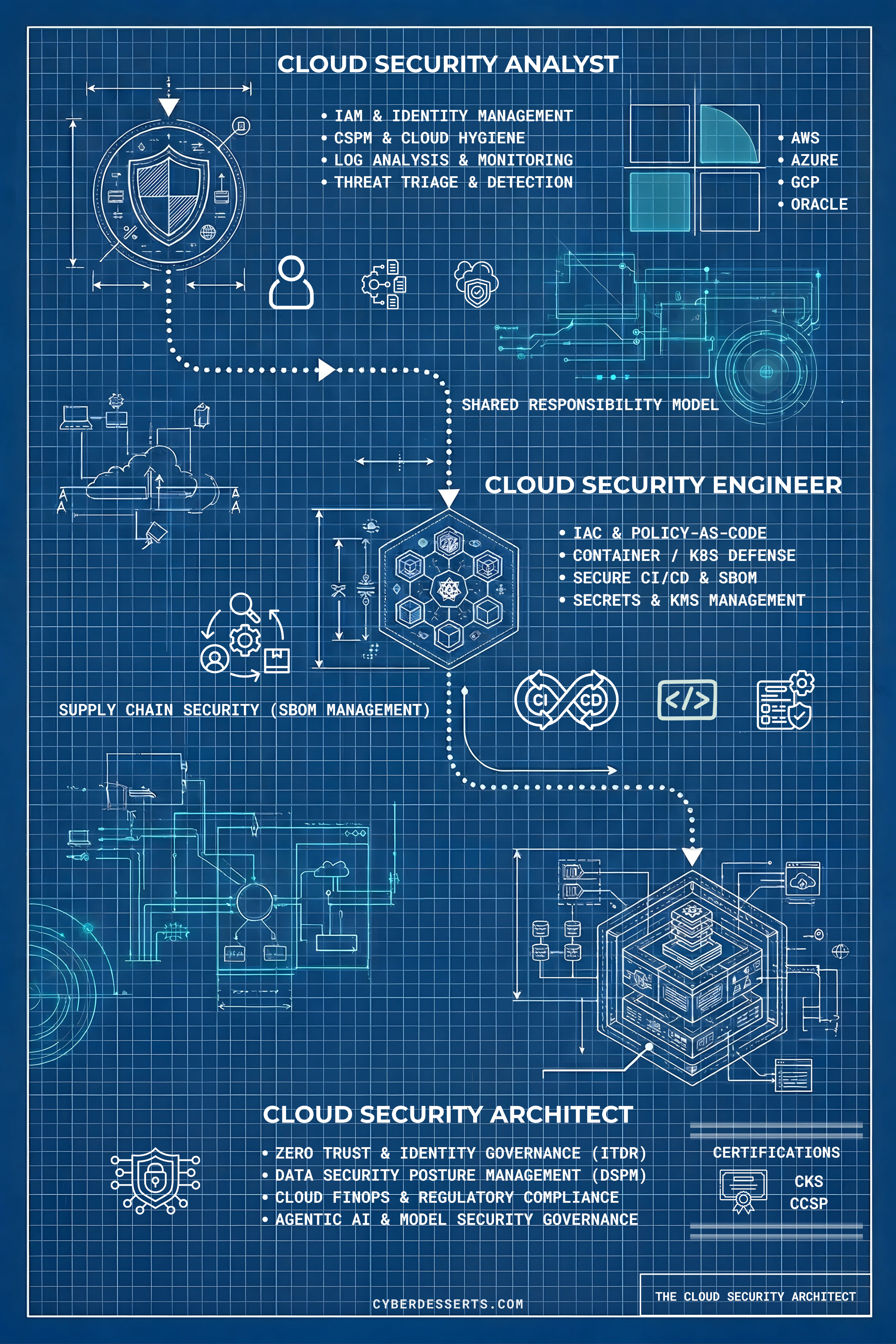
What This Roadmap Covers
The roadmap follows the way cloud security careers actually progress, from hands-on operational work through engineering automation and into architectural design. Two key concepts bridge the tiers: understanding the Shared Responsibility Model gets you from analyst to engineer, and mastering Supply Chain Security (especially SBOM management) is what separates engineers from architects.
Cloud Security Analyst (Entry Level)
This is where you build the operational instincts that everything else depends on. You'll work across AWS, Azure, GCP, and Oracle cloud platforms, focusing on four core skill areas: IAM and identity management, CSPM and cloud hygiene, log analysis and monitoring, and threat triage and detection. These aren't just checklist items. IAM misconfigurations are still the number one cause of cloud breaches, and the analysts who can spot identity-based attacks early are the ones who move up fastest. Understanding cloud security posture management at this level gives you the visibility into what "normal" looks like, which is the foundation for everything you'll build later.
Cloud Security Engineer (Mid Level)
The jump from analyst to engineer is really about moving from detecting problems to preventing them at scale. The Shared Responsibility Model is the bridge here: once you deeply understand where the cloud provider's security ends and yours begins, you can start automating the controls that close those gaps. This tier covers infrastructure as code and policy-as-code, container and Kubernetes defense, secure CI/CD pipelines with SBOM integration, and secrets and KMS management. You're no longer just monitoring cloud environments; you're building the guardrails that make them secure by default.
Cloud Security Architect (Senior Level)
Architects don't just implement security controls. They design the frameworks that determine how an entire organization approaches cloud risk. This tier covers zero trust and identity governance (including ITDR), data security posture management (DSPM), cloud FinOps and regulatory compliance, and agentic AI and model security governance. That last one is new for 2026 and increasingly non-negotiable as organizations deploy AI agents with access to production infrastructure. The roadmap highlights CKS and CCSP as the certifications that validate this level of expertise.
Cloud security roles saw a 32% increase in job postings in early 2026, with architect-level positions among the hardest to fill. Read the full analysis in our Cybersecurity Career Report.
Who This Is For
- Security analysts looking to specialize in cloud platforms
- IT professionals transitioning into cloud security
- Cloud engineers who want to add security expertise
- Anyone planning a long-term career path toward security architecture
Go Deeper: The Full Career Guide
This roadmap covers the cloud security track, but it's one of four paths through cybersecurity. Our 58-page 2026 Cybersecurity Career Guide covers all of them: Blue Team defense, Red Team offensive security, Cloud Security, and GRC. It also breaks down how AI is reshaping these roles right now, lays out certification strategies for each track, and includes a 2026 lab build guide so you can start practicing on real tools.
Read the 2026 Cybersecurity Career Guide